Visual Uplink v4.2
Intrusive Igneous Rock
Discover intrusive igneous rocks formed beneath the Earth's surface, their slow cooling process, coarse-grained textures, and examples like granite and gabbro.
Geo-Data
Interactive Occurrence Map
Linked Archive
Seismic Mapping Node 1
Linked Archive
Seismic Mapping Node 2
Intrusive Igneous Rocks
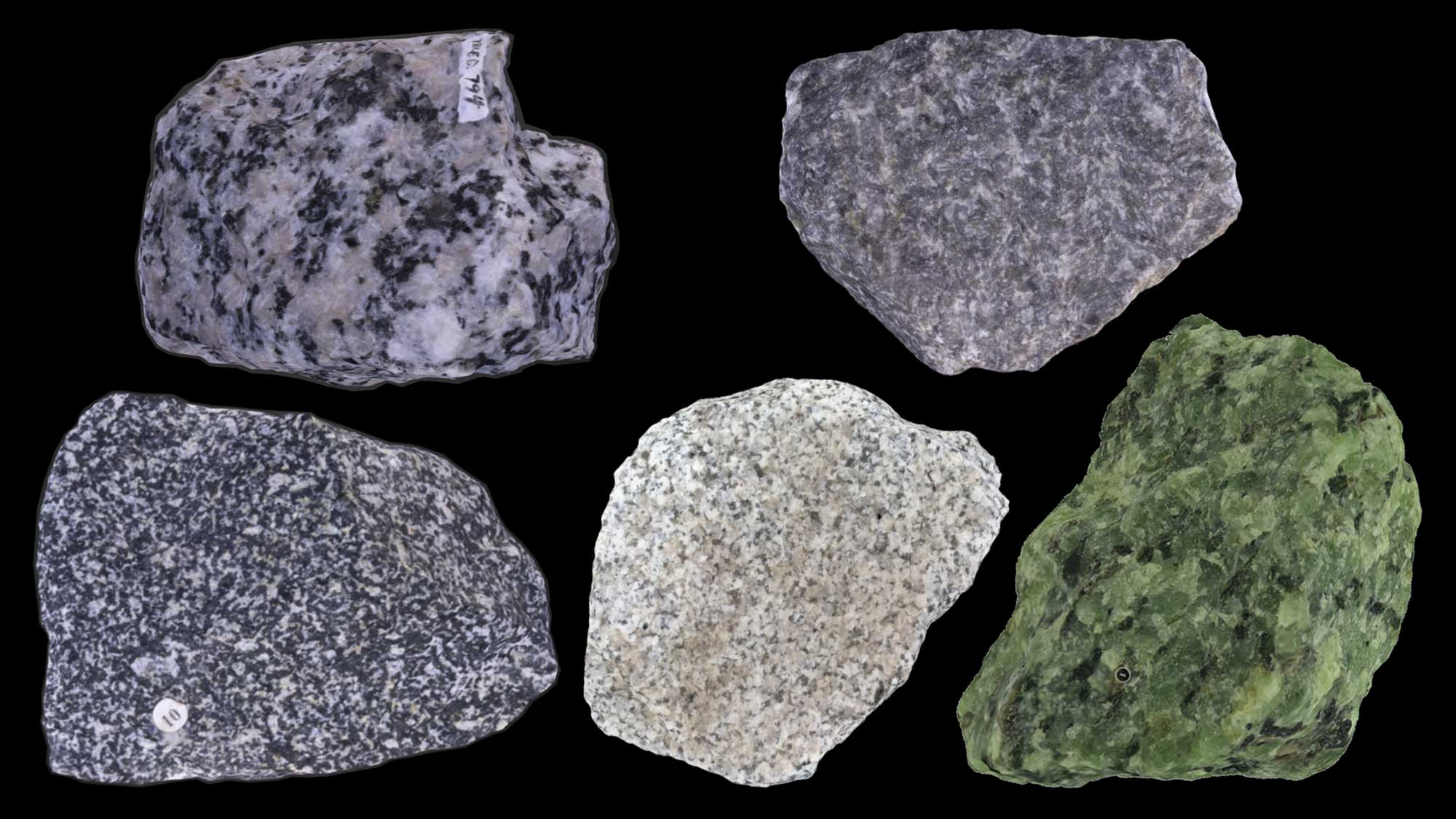
Intrusive igneous rocks, also known as plutonic rocks, form when magma cools and solidifies slowly beneath the Earth's surface. This slow cooling process allows large crystals to develop, giving these rocks a coarse-grained texture that is easy to see with the naked eye.
These rocks are an important part of the Earth's crust and provide valuable information about the geological history and composition of the planet. Their mineral-rich structure makes them durable and widely used in construction and decorative applications.
Common Examples
- Granite: Light-colored, high in quartz and feldspar, often used in countertops and monuments.
- Diorite: Intermediate composition with a mix of light and dark minerals.
- Gabbro: Dark-colored, rich in iron and magnesium.
- Peridotite: Dense rock mostly made of olivine, forming part of the Earth's mantle.
Key Characteristics
- Formed beneath the Earth's surface
- Slow cooling allows large, visible crystals
- Coarse-grained texture (phaneritic)
- Durable and mineral-rich
Understanding intrusive igneous rocks helps geologists interpret the formation and evolution of Earth's crust and identify valuable mineral resources.