Published
2/13/2026
Read Time
6 Min Read
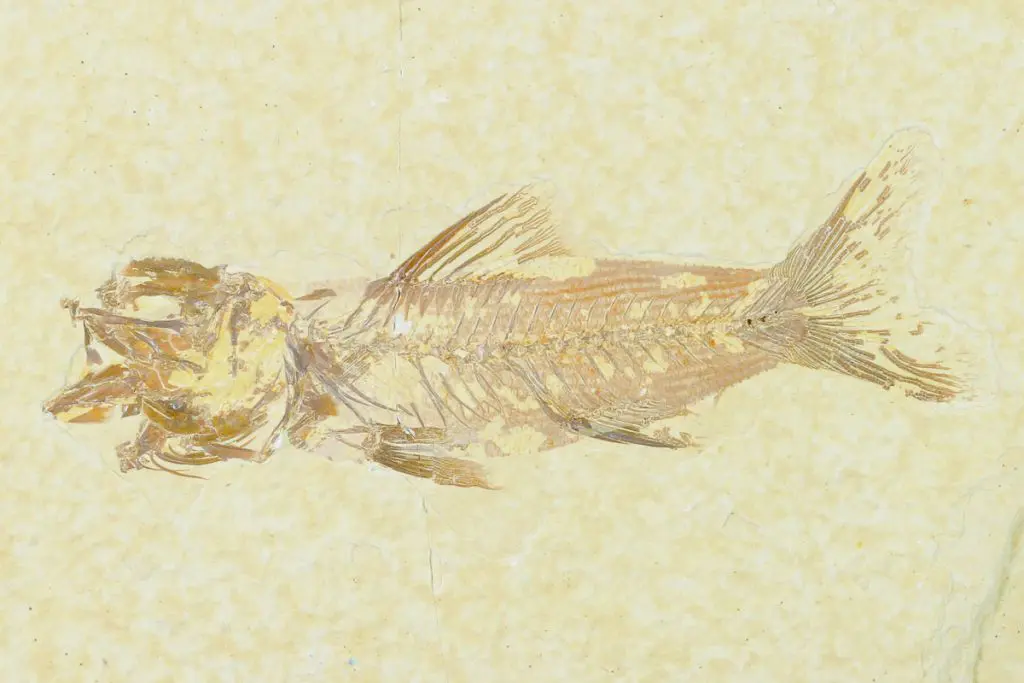
Green River Fossils: Bats, Crayfish, Horse, Turtles.
Discover Green River Formation fossils including ancient bats, turtles, horses, stingrays, crayfish, and the famous “Turritella” (Elimia) agate.
The Green River Formation has yielded some of the best-preserved and oldest fossil bats ever discovered. It has also produced a remarkable variety of unusual fossils, including turtles, crayfish, horses, and stingrays. Many of these specimens come from Fossil Lake and are exceptionally detailed due to the fine-grained sediment in which they were preserved.
Fossil Turtles
One of the most impressive discoveries is a 1.7-meter (5 ft 6 in) softshell turtle, among the largest known from Fossil Lake. During the Eocene epoch, trionychid turtles reached their maximum size. Today, North America's largest softshell turtles grow only to about 51 cm (20 inches).
Another notable specimen belongs to the extinct Baenidae family. Shell features, a long tail, and recurved claws suggest these turtles were strong bottom-walkers that thrived in ancient lake environments.
Fossil Horses
Most mammal fossils consist of isolated teeth or bone fragments. However, the Green River Formation produced a fully articulated early horse—an extremely rare and significant discovery. To date, it remains the only horse found in the formation.
Fossil Stingrays
The stingray Heliobatis radians had small crushing teeth adapted for feeding on snails and mollusks. It also possessed barbed tail spines used for defense, showing that complex aquatic ecosystems thrived in Fossil Lake.
Fossil Crayfish
Crayfish lived in the shallow, near-shore waters of Fossil Lake. The genus Procambarus is known only from Eocene deposits of this region. Its closest living relative, Austrocambarus, is found in modern-day Mexico.
“Turritella” Agate
“Turritella Agate” is a brownish gemstone material containing fossil snail shells preserved within semitransparent chalcedony. The spiral shells accumulated in shallow inland sea sediments and were later agatized by silica deposition, creating a highly desirable lapidary material.
Although widely known as “Turritella,” the name is technically incorrect. The fossil snails preserved in this agate belong to the species Elimia tenera, a member of the Pleuroceridae family. A more accurate name would be “Elimia Agate.”
Strategic Vision
Analysis of tectonic shifts requires a forward-thinking approach to planetary surveillance and data decryption.
- Satisfied conveying a dependent contented gentleman
- Warrant private blushes removed an in equally
- Delivered dejection necessary objection
Feedback Uplink
Reader Transmissions
Decrypted logs from the community. These insights help calibrate our seismic forecasting models.
Signal Lost
No entries detected in this sector.
Related Intelligence
View All Logs
Volcanic Rocks: Formation, Types, and Importance
Explore volcanic rocks: their formation, types, characteristics, and significance in Earth's geology. Understand how lava shapes the planet.
Read Dossier

Olympic Curling Stones Made from Special Granite
The United States won its first-ever Olympic Gold Medal in the sport of curling at the 2018 Winter Olympics. This brought attention to the use of granite in manufacturing the curling stones, also known as "rocks," used to play this sport.
Read Dossier